Last summer a neighbor called me over, upset that her water bill had jumped 40 percent while her tomatoes still looked thirsty. She had a sprinkler running twice a day on a bed of raised vegetables. Half the water was landing on her gravel path, and most of the rest was evaporating in the Tucson heat before it ever reached a root.
We swapped her setup for drip tubing in about an hour. Her next bill dropped, and the tomatoes perked up within a week.
That scene plays out constantly, and it usually comes down to picking the wrong tool. So let’s look honestly at drip vs sprinkler vs soaker hose, where each one shines, and how they stack up on the things that actually matter: water use, coverage, and the kind of garden you have.
Key takeaways
- Drip is the most efficient of the three, delivering water right to the root zone with 90 percent or better efficiency.
- Sprinklers cover large, even areas like lawns fast but lose a lot to evaporation and wind.
- Soaker hoses are the cheapest and simplest, great for dense rows and short beds but tricky on slopes or long runs.
How each method actually delivers water
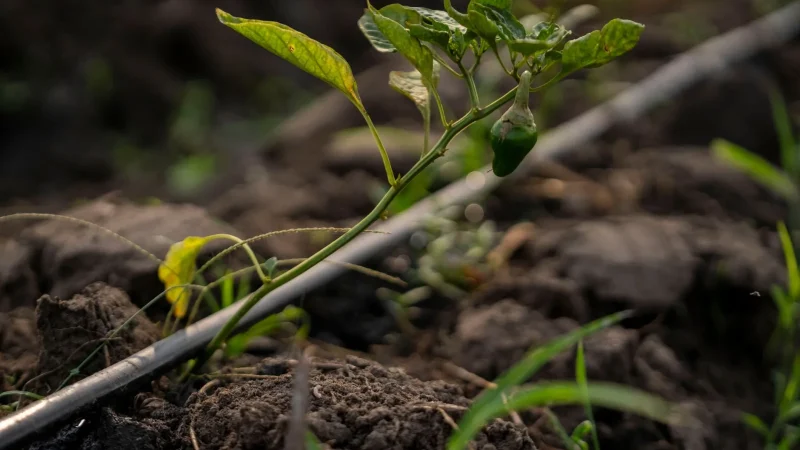
Drip irrigation uses tubing (usually 1/2 inch mainline with 1/4 inch feeder lines) fitted with emitters. An emitter is a small fitting that drips water at a set rate, commonly 0.5, 1, or 2 gallons per hour (gph). Water goes straight to each plant’s base, slow and steady.
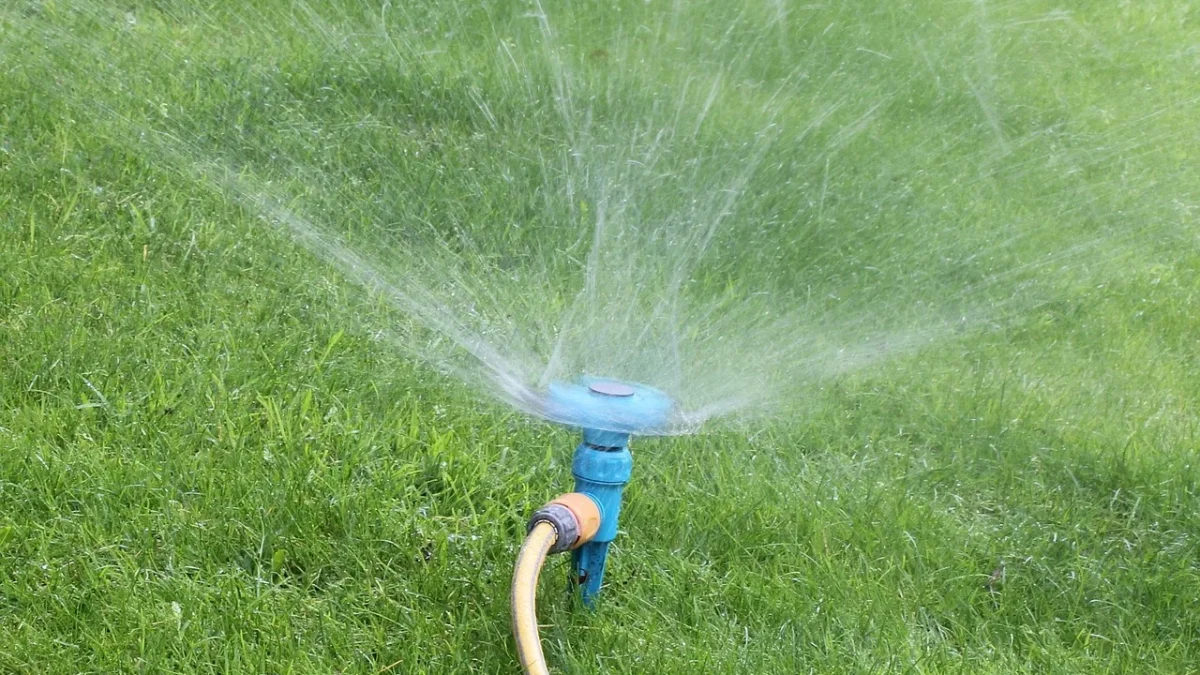
A sprinkler throws water through the air over a wide radius, mimicking rain. Coverage is broad and even, which is why lawns love them.
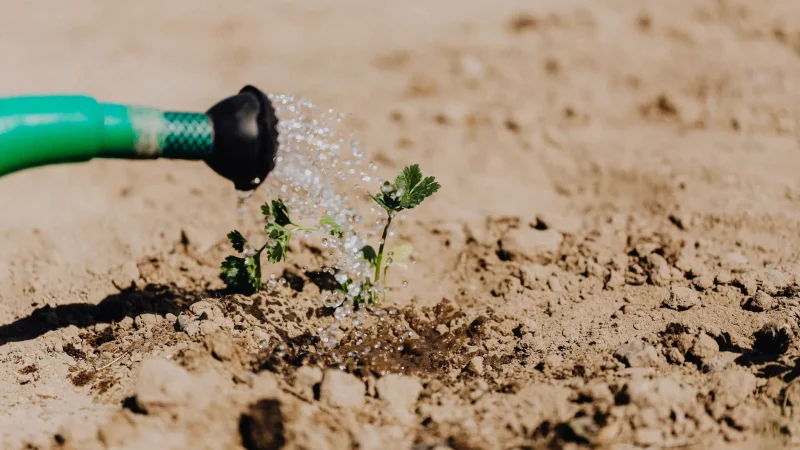
A soaker hose is a porous rubber hose that weeps water along its entire length. You snake it through a bed, turn it on low, and the whole line seeps at once. It is the least precise but the easiest to set up.
Water use: where the real difference shows
This is the category people care about most, and the gap is bigger than most beginners expect.
Drip runs at roughly 90 to 95 percent efficiency, meaning almost every drop reaches roots. Sprinklers land closer to 65 to 75 percent because of evaporation, wind drift, and runoff. Soaker hoses fall in the middle, around 80 percent, though they can waste water on the far end of a long run where pressure drops off.
I dug into the real numbers in a separate piece on how much water drip irrigation actually saves, and the short version is that switching from sprinklers to drip commonly cuts outdoor water use by 30 to 50 percent.
Quick tip
Water early in the morning, before 8 a.m., no matter which method you use. Cooler air and calmer wind mean far less evaporation, and leaves dry out during the day, which helps prevent fungal disease.
Side-by-side comparison
Here is how the three line up on the factors I get asked about most. Costs are rough estimates for a small home garden bed.
| Factor | Drip | Sprinkler | Soaker hose |
|---|---|---|---|
| Water efficiency | 90-95% | 65-75% | ~80% |
| Best coverage | Individual plants, rows | Lawns, large open areas | Dense beds, short rows |
| Setup difficulty | Moderate | Easy to moderate | Very easy |
| Typical cost | $40-100 per bed | $20-60 above ground | $15-30 per hose |
| Ideal pressure | 15-30 psi | 30-50 psi | 10-15 psi |
| Lifespan | 5-10 years | 5-15 years | 2-4 years |
Notice the pressure row. Soaker hoses want low pressure, around 10 to 15 psi (pounds per square inch, a measure of water force). Hook one to full house pressure of 45 psi and it will burst or spray unevenly. A cheap pressure regulator solves that.
Matching the method to your garden
The right choice depends far more on what you are growing than on any ranking.
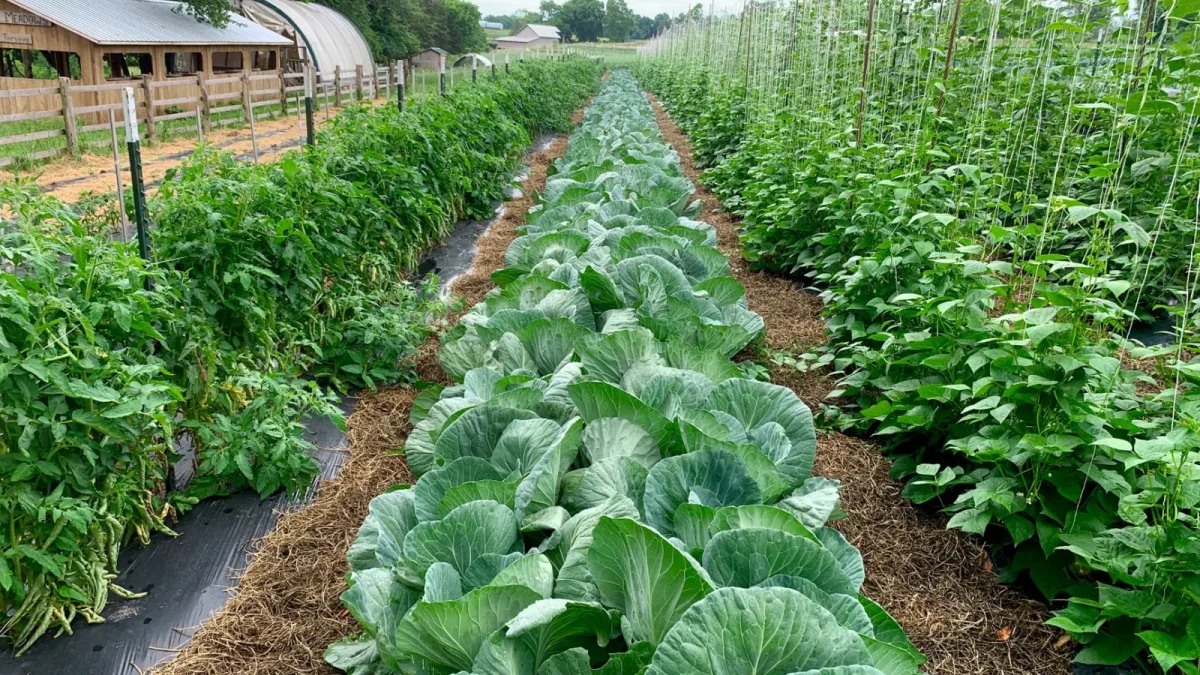
For a vegetable garden with spaced plants like peppers, tomatoes, or squash, drip wins easily. You place an emitter at each plant and skip the empty soil, which also means fewer weeds.
For a traditional turf lawn, a sprinkler is the practical answer. You cannot realistically drip-irrigate 800 square feet of grass, and grass roots are shallow and spread evenly, so overhead water suits them.
For a tightly planted flower bed or a row of carrots and lettuce, a soaker hose is often the simplest fit. The plants sit close together, so the continuous seep line matches how they grow.
Watch out
A mistake I see constantly is running a soaker hose across a slope. Water pools at the low end and starves the top. On any real grade, drip tubing with pressure-compensating emitters keeps output even from top to bottom.
Cost and maintenance over time
Soaker hoses are cheapest to buy, often $15 to $30, but they degrade fastest. UV light and mineral buildup clog the pores, so plan to replace them every 2 to 4 years.
Sprinklers sit in the middle for cost and last a long time, though above-ground ones can get knocked over or clogged by hard water.
Drip costs the most upfront and takes the most planning, but a well-built system runs quietly for 5 to 10 years. If you want to see whether that math works for your situation, I broke down the full spend in my look at whether drip irrigation is worth it.
Good to know
You can mix methods on one property. I run drip in the vegetable beds, a soaker in the herb strip, and a single sprinkler zone on the small patch of lawn, all off separate valves. Nobody says you have to pick just one.
A quick checklist before you choose
Run through these questions and the answer usually becomes obvious.
- Are plants spaced out or packed tight? Spaced favors drip, packed favors soaker.
- Is it a lawn or a bed? Lawn means sprinkler almost every time.
- Is the ground flat or sloped? Slopes push you toward drip with pressure-compensating emitters.
- What is your water pressure? Very low pressure suits soaker, moderate suits drip.
- How long do you want it to last? Longevity favors drip.
If you are brand new to any of this, start with the fundamentals in my beginner’s guide to drip irrigation before you buy a single fitting. And if you have heard that drip is fussy or only for deserts, my rundown of common drip irrigation myths clears up the ones I hear most often.
Where to go from here
None of these three is objectively best. Drip vs sprinkler vs soaker hose is really a question of fit, and the winner changes bed by bed.
Pick the method that matches your plants, your slope, and your pressure, and you will water less, spend less, and grow more. For deeper reading on efficiency numbers, the EPA WaterSense watering tips and your local university cooperative extension are both solid, no-nonsense places to check regional guidance.
Frequently asked questions
Which uses the least water, drip, sprinkler, or soaker hose?
Drip irrigation uses the least, running at about 90 to 95 percent efficiency because water goes straight to the roots. Soaker hoses come next at roughly 80 percent. Sprinklers use the most because a good share is lost to evaporation, wind, and runoff before it reaches the soil.
Can I use a soaker hose for my lawn?
It is not a good fit. Soaker hoses seep along a single line, so covering a wide, even lawn would take many hoses laid close together. A sprinkler distributes water evenly across turf far more effectively and is the standard choice for grass.
Do I need a pressure regulator for drip or soaker systems?
Yes, almost always. Drip systems run best at 15 to 30 psi and soaker hoses at just 10 to 15 psi, while household water often reaches 45 psi or higher. A low-cost regulator prevents blowouts, uneven output, and premature wear on the tubing.
How long does each system last?
Soaker hoses are the shortest lived at about 2 to 4 years, since UV exposure and mineral buildup clog the pores. Sprinklers can run 5 to 15 years depending on quality. A well-installed drip system typically lasts 5 to 10 years with minor part replacement.
Is drip irrigation harder to install than the other two?
It takes more planning because you lay tubing and place emitters at each plant, but it is very doable for a beginner in an afternoon. Soaker hoses are the easiest, since you just snake the hose through a bed and turn it on. Sprinklers fall in between for an above-ground setup.
Can I combine these watering methods in one yard?
Absolutely, and many gardeners do. You can run drip in vegetable beds, a soaker hose in a tightly planted herb strip, and a sprinkler zone on a small lawn, each on its own valve. Matching the method to each area gives you the best results overall.