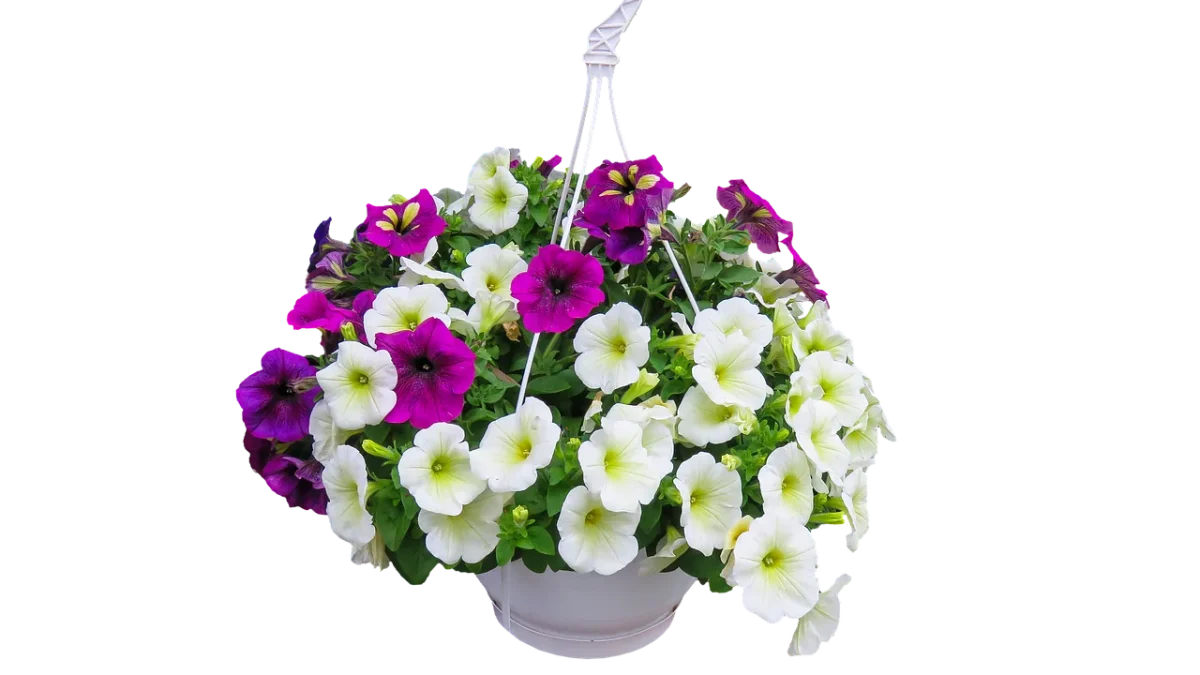
Last summer a client called me over because her petunia basket kept dying while the pot right below it thrived on the same line. She was sure the emitter was broken. It wasn’t. The water was running straight down through one channel in the soil and pouring out the bottom, leaving three quarters of the roots bone dry.
That single basket taught me everything wrong with how most folks approach hanging basket drip watering. The container is small, it dries fast, it swings in the wind, and gravity fights you the whole way. Get the details wrong and you get soggy centers, crispy edges, and clogged tubing all at once.
Let me walk you through the mistakes I see constantly, and the fixes that actually hold up.
Key takeaways
- Overflow usually means too much water too fast, not too much total water. Slow the flow with a low-gph emitter.
- Dry edges come from a single center emitter. Baskets over 12 inches wide need two or more emitter points.
- Clogs start at the tiny 1/4 inch tubing. Filtration and a pressure regulator prevent most of them.
- Baskets need shorter, more frequent cycles than in-ground plants, sometimes twice a day in peak heat.
Mistake 1: Drowning the basket with one big blast
The most common error is running one high-output emitter for a long stretch. People see water beading on the surface and assume it isn’t enough, so they crank the run time. Then it all rushes out the drainage holes.
A hanging basket holds maybe half a gallon to two gallons of soil. A 2 gph (gallons per hour) emitter dumps water faster than peat-based potting mix can absorb it. The water finds the path of least resistance, carves a channel, and exits the bottom in under a minute.
Switch to a 0.5 gph or 1 gph emitter and let it run longer instead. Slow water soaks sideways into the mix rather than drilling straight down. In my own baskets I use half-gallon emitters and run two short cycles a day.
Quick tip
If you already own 2 gph emitters, cut your run time in half and add a second cycle 30 minutes later. That pause lets the first round of water spread through the mix before the next arrives.
Mistake 2: One emitter in a wide basket, so the edges go dry
A single emitter dripping in the dead center of a 14 inch basket waters a circle maybe 4 to 6 inches across. Everything past that stays dry, which is exactly why the outer flowers wilt while the middle looks fine.
For any basket wider than 12 inches, run 1/4 inch tubing (the thin distribution tubing, a quarter inch across) to two or three emitter points spaced evenly around the crown. Now you’re wetting the whole root zone instead of one spot.
Better yet, use a small ring of 1/4 inch tubing with several emitters, or a mini in-line dripline that circles the pot. A basic ring kit runs about 4 to 8 dollars and fixes the dry-edge problem in an afternoon.
Watch out
Do not just aim one emitter at the edge to fix a dry side. You will simply move the dry spot to the opposite side. Multiple points spaced around the crown are the real answer.
Mistake 3: Ignoring the clog risk in tiny tubing
The 1/4 inch tubing and micro-emitters that feed baskets have openings you can barely see. Grit, mineral scale, and algae plug them fast, especially on hard water like we have here in Tucson.
A mistake I see constantly is a system with no filter and no pressure regulator. Standard household water runs 40 to 70 psi (pounds per square inch), and drip emitters are built for roughly 15 to 30 psi. Too much pressure blows fittings apart and pushes debris deep into the emitters.
Install a 150 to 200 mesh filter and a 25 psi pressure regulator at the faucet. Together they cost around 15 to 25 dollars and prevent the majority of clogs I get called out for.
| Symptom | Likely cause | Fix |
|---|---|---|
| Water pours out the bottom fast | Emitter flow too high for the mix | Drop to 0.5-1 gph, run longer |
| Outer plants wilt, center fine | Single center emitter | Add 2-3 emitter points or a ring |
| One basket gets nothing | Clogged 1/4 inch emitter | Clean or replace, add filter |
| Fittings pop off the line | Pressure too high | Add a 25 psi regulator |
Mistake 4: Watering baskets on the same schedule as the garden
Baskets dry out two to three times faster than in-ground beds. They’re exposed on all sides, the wind pulls moisture off them, and the small soil volume just can’t buffer heat.
Yet people put their baskets on the same valve and timer as their shrubs. The shrubs are happy on three deep waterings a week. The baskets are dead by Wednesday.
In summer, most baskets want water once or twice a day in short cycles. If you’re building out your full setup, my drip watering schedule by plant type breaks down run times by what you’re actually growing, which helps you avoid lumping baskets in with everything else.
Good to know
Lift the basket after watering. A properly watered basket feels heavy. If it still feels light, your cycle is too short or your emitter flow is too low for the pot size.
Mistake 5: Skipping the quick weekly check
Drip systems are quiet, which is their charm and their trap. A single clogged emitter can go unnoticed for a week, and by then the plant is stressed past saving.
Run through this short list once a week during the growing season:
- Turn the system on and watch each basket drip for 30 seconds.
- Feel for any emitter that isn’t dripping, then clean or swap it.
- Check that no 1/4 inch tubing has popped loose or kinked.
- Lift a basket or two to confirm they feel heavy after a cycle.
- Flush the line ends once a month to clear grit.
The whole check takes about five minutes. It has saved more of my clients’ baskets than any fancy emitter ever has.
A quick real-world scenario
Picture a porch with four 12 inch fern baskets on a single 1/2 inch supply line (the main distribution tubing, half an inch across). The owner runs one 2 gph emitter per basket for 10 minutes each morning.
By July, two baskets look great and two look scorched. The scorched ones are at the end of the line, where pressure has dropped and the emitters barely drip.
The fix is three-fold: add a pressure regulator, split each basket to two 1 gph emitter points, and move to two 6 minute cycles morning and evening. Same water budget, spread smarter, and all four baskets recover within a week. This same balancing act shows up whether you’re growing ferns, feeding thirsty strawberries in hanging pots with drip emitters, or keeping a mixed basket alive.
Matching the fix to the plant
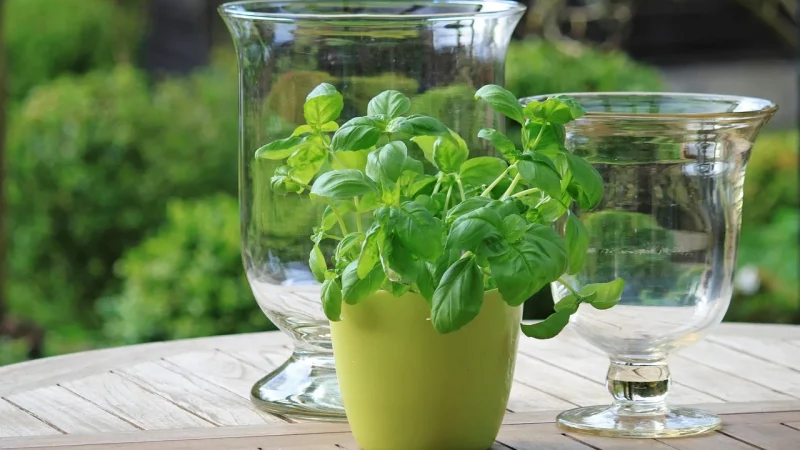
Not every basket wants the same treatment. Trailing herbs like thyme and oregano prefer to dry slightly between waterings, so shorter cycles suit them. If you grow a basket of kitchen herbs, my notes on drip watering herbs and schedules that actually work will keep you from overdoing it.
Heavy bloomers like fuchsia and petunia are the opposite. They drink hard in heat and sulk the moment they dry out, so those are the baskets that most often need a second daily cycle.
Even a small trailing rose in a large hanging container follows the same slow-soak logic covered in my guide on how to water roses with drip irrigation, just scaled down to the pot.
Where to go from here
Start with the two changes that fix the most baskets: slow your emitter flow and add a filter plus pressure regulator. Those two moves alone clear up overflow and most clogging.
Then space your emitters so the edges get water, and split baskets onto their own short, frequent cycle. For dialing in exact numbers, the WaterSense program has a helpful primer on drip basics at EPA WaterSense, and your local land-grant extension service, like the University of Arizona Cooperative Extension, can tell you what your regional water and climate demand.
Give your baskets one honest five-minute check each week, and they’ll reward you all season.
Frequently asked questions
How often should I water hanging baskets on a drip system in summer?
Most baskets need water once or twice a day in peak summer heat, in short cycles rather than one long soak. Baskets dry two to three times faster than in-ground plants because they're exposed on all sides. Lift a basket after watering to check: a properly watered one feels noticeably heavy.
What size emitter is best for a hanging basket?
For most baskets, a 0.5 gph or 1 gph emitter works far better than a 2 gph one. Slower flow soaks sideways into the mix instead of drilling a channel straight out the bottom. Baskets wider than 12 inches usually need two or three of these lower-flow points spaced around the crown.
Why does water pour straight out the bottom of my basket?
That is almost always flow that is too fast for the potting mix to absorb, not too much total water. Peat-based mixes can't take a 2 gph blast, so the water carves a channel and exits the drainage holes. Switch to a lower-flow emitter and run it longer, or split one cycle into two shorter ones.
How do I stop my drip emitters from clogging?
Install a 150 to 200 mesh filter and a 25 psi pressure regulator at the faucet, which together cost around 15 to 25 dollars. Flush the line ends once a month to clear grit, and check each emitter weekly. Hard water areas should watch for mineral scale, which slowly narrows the tiny emitter openings.
Why do the edges of my basket dry out while the center stays wet?
A single center emitter only wets a circle about 4 to 6 inches across, so anything past that stays dry. The fix is to run 1/4 inch tubing to two or three emitter points spaced evenly around the crown, or use a small ring of tubing with several emitters. Do not just move one emitter to the edge, or you'll shift the dry spot to the other side.
Can I put hanging baskets on the same valve as my garden beds?
It's usually a mistake. Beds are happy on a few deep waterings a week, while baskets need short daily or twice-daily cycles. If you must share a valve, at least give baskets their own emitters sized for fast drying, and consider a separate timer program so the baskets can run more often.