Last spring a neighbor called me over because half her raised bed looked drowned and the other half looked like the Sonoran Desert. Same timer, same tubing, same run time for everything. The problem was simple: she was watering her basil like it was a tomato plant. They do not want the same thing, and no single schedule fits a whole garden.
That is really the heart of a good drip watering schedule by plant. You are not looking for one magic number. You are matching how much water each crop drinks, how deep its roots go, and how fast your soil drains. Once you sort plants into a few groups, the whole thing gets a lot less fussy.
I have spent 12 years installing and fixing drip systems around Tucson, and this page is the reference I wish every beginner had taped to the shed wall. Think of it as the trunk of the tree, with detailed guides branching off for each crop.
Key takeaways
- Group plants by root depth and thirst, then set run times per group, not per garden.
- Water deeply and less often to push roots down, instead of shallow daily sips.
- Emitter output (measured in gallons per hour) plus run time equals the water each plant gets.
- Check soil moisture 3-4 inches down before trusting any schedule, including this one.
How a drip schedule actually works
A drip system delivers water slowly through small openings called emitters. Each emitter is rated in gallons per hour (GPH), usually 0.5, 1, or 2 GPH. That rating is your building block.
Here is the math that trips people up. A 1 GPH emitter running 30 minutes puts out half a gallon. Run it an hour and you get a full gallon. So “how long do I water” always depends on your emitter size, not just the clock.
Most home systems run best around 10-15 psi (pounds per square inch, a measure of water pressure). Too high and cheap emitters pop off the 1/4 inch tubing. A basic pressure regulator costs about 8 to 12 dollars and saves you a soggy afternoon of hunting leaks.
Good to know
Deep, infrequent watering beats a daily splash. When the top inch dries between waterings, roots chase moisture downward and the plant handles heat far better. Shallow daily runs train roots to stay near the surface, right where they cook.
The master schedule by plant group
These are warm-season starting points for mild weather, using 1 GPH emitters in loam soil. Sandy soil drains faster, so water more often for less time. Clay holds longer, so stretch the gap between runs. Always adjust for your own dirt and your own sun.
| Plant group | Emitters per plant | Run time | Frequency (mild) |
|---|---|---|---|
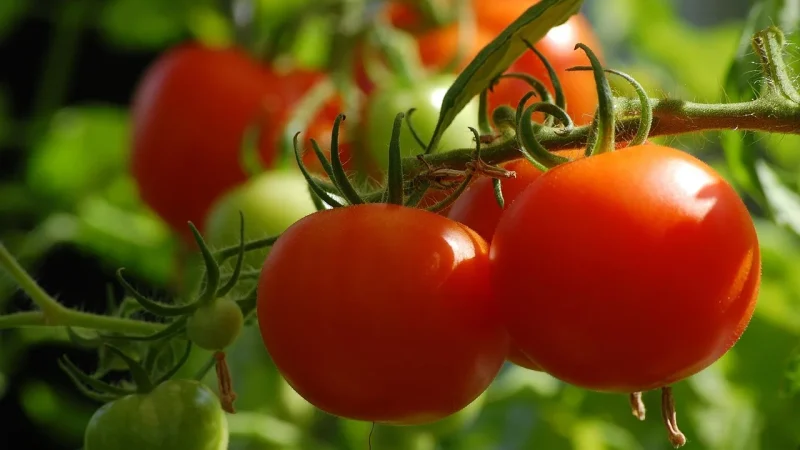
| Tomatoes | 1-2 (2 GPH) | 45-60 min | Every 2-3 days |
| Peppers and eggplant | 1 (1 GPH) | 40-50 min | Every 2-3 days |
| Cucumbers and squash | 2 (1 GPH) | 45-60 min | Every 2 days |
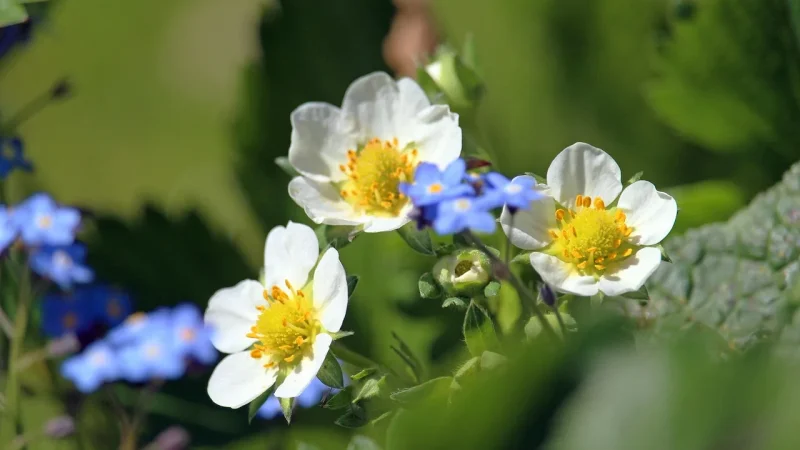
| Strawberries | 1 (0.5 GPH) | 30-40 min | Every 2 days |
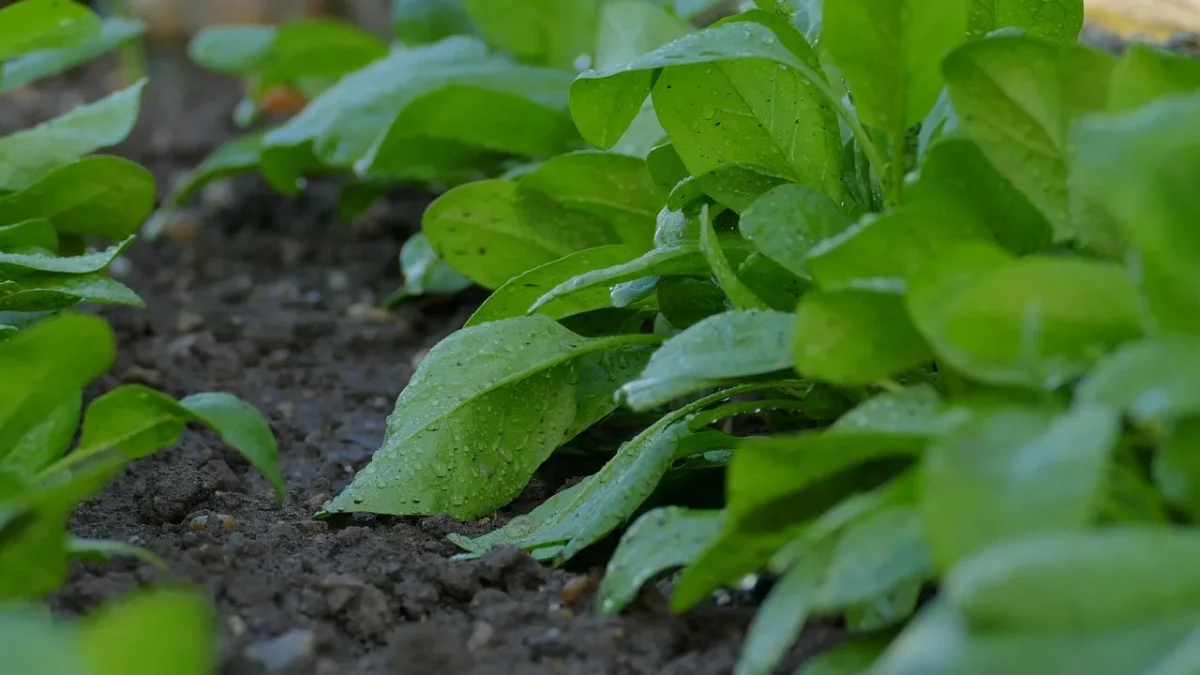
| Leafy greens | Line spacing 6 in | 20-30 min | Daily to every 2 days |
| Herbs (most) | 1 (0.5 GPH) | 20-30 min | Every 3-4 days |
In real July heat here, I roughly double the frequency and water in the early morning. In cool spring, I stretch the gaps. The run time usually stays put; it is the frequency that moves with the weather.
Deep drinkers: tomatoes, cucumbers, squash
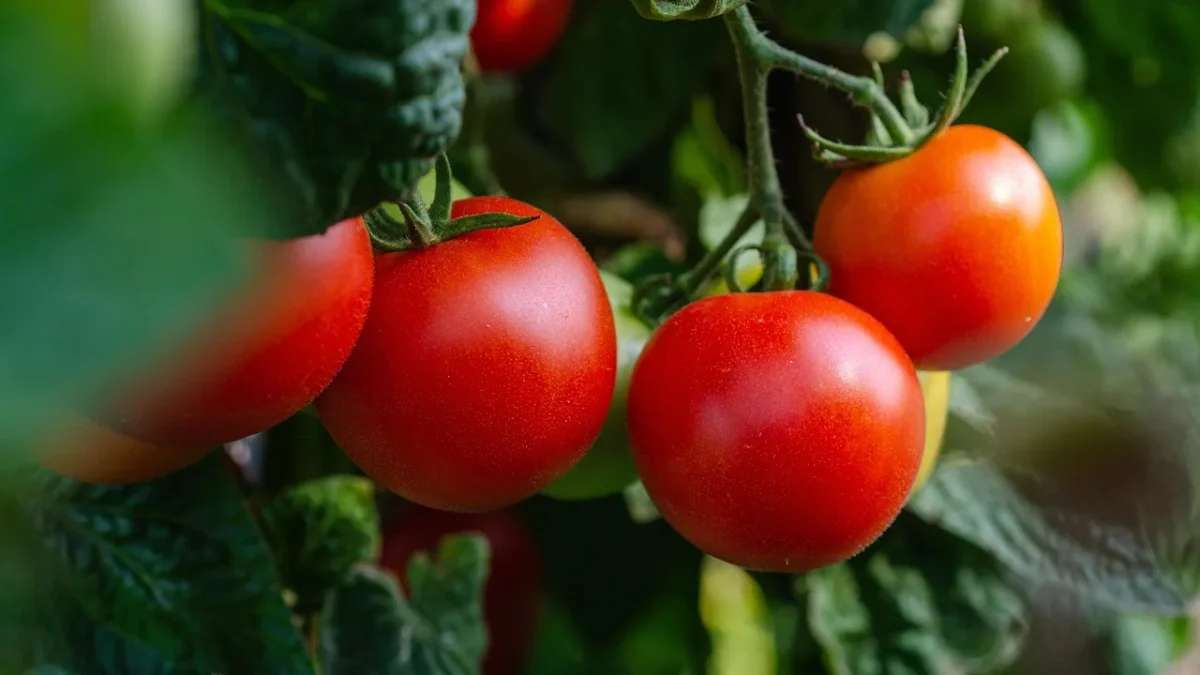
These plants have deep roots and heavy fruit, so they want a big, thorough soak followed by a dry-down. Skimping here gives you blossom end rot on tomatoes and bitter, misshapen cucumbers.
For the vining crops, I lean on two emitters per plant so the root zone wets evenly. My full walkthrough on how to water tomatoes with drip irrigation covers the seedling-to-harvest ramp, and the drip irrigation setup for cucumbers and squash handles their sprawling, thirsty habit.
Quick tip
Dig down with a trowel about an hour after a run. If the soil is damp 6 inches deep, your run time is right. Dry at 3 inches means run longer; muddy at the surface means run shorter and more often.
Steady feeders: peppers and strawberries
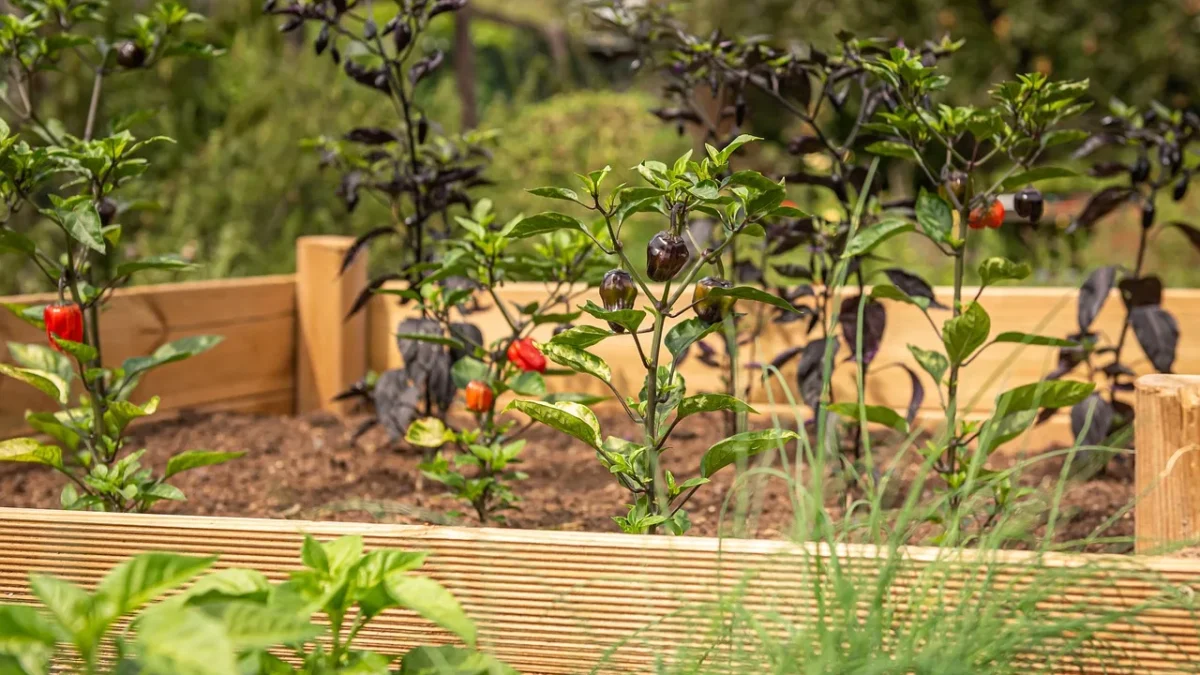
Peppers hate swinging between bone-dry and flooded; that stress drops flowers fast. They like steady, moderate moisture, which is exactly what a modest daily-ish drip delivers. The timing details live in my notes on drip watering for peppers.
Strawberries are shallow-rooted and sulk in soggy crowns. Low-output 0.5 GPH emitters keep the berries plump without rotting the plant. If you grow them, the guide to watering strawberries with drip emitters gets into bed spacing and mulch.
Light and shallow: greens and herbs
Leafy greens like lettuce and spinach have short roots and thin leaves, so they dry out quickly and want frequent, gentle watering. Short runs, more often, keep them tender instead of bolting to seed. My best practices for watering leafy greens with drip break down spacing for a dense bed.
Herbs are the outlier most beginners get wrong. Basil wants steady moisture, but rosemary, thyme, and oregano are Mediterranean plants that rot with too much love. Group the thirsty herbs separate from the drought-tough ones; the drip watering schedules for herbs sort out which is which.
Watch out
A mistake I see constantly is running one zone for the whole bed. If tomatoes and thyme share a timer, someone loses. Split thirsty and thrifty plants onto separate 1/4 inch lines or separate valves, even in a small 4 by 8 foot bed.
Dialing in your own numbers
Treat this schedule as a first draft, then let your garden edit it. Here is the loop I run with every new install.
- Sort your plants into the groups above and note each one’s emitter size.
- Set the starting run time and frequency from the table.
- Water, wait an hour, then dig down 4-6 inches to check moisture.
- Adjust run time for depth, adjust frequency for how fast it dries.
- Recheck weekly as the season heats up or cools down.
For a broader sanity check on how much water your climate demands, the EPA WaterSense watering tips are a solid, plain-language reference. University extension services are gold too; I send folks to the University of Minnesota Extension for regional guidance.
A quick real-world run
Picture a 4 by 8 raised bed with four tomatoes, six peppers, and a strip of lettuce. I would give tomatoes two 2 GPH emitters each on their own line, peppers one 1 GPH emitter each, and run a 6-inch-spaced 1/4 inch line down the lettuce.
Tomatoes and peppers get 50 minutes every other day. Lettuce gets 25 minutes daily off a separate valve. Total hardware cost, maybe 35 to 45 dollars including the regulator and a battery timer.
Where to go from here
Start with the group table, water deeply, and let a trowel tell you the truth. Once your zones are split by thirst, the schedule almost runs itself, and you spend the season picking food instead of chasing leaks.
Pick the crop you are growing most, open its detailed guide above, and fine-tune from there. This page will be waiting whenever you add something new to the bed.
More guides in Watering by Plant and Space
- Drip Irrigation for Cucumbers and Squash
- Drip Irrigation for Fruit Trees by Age
- Drip Watering for Peppers: Timing and Amounts
- Drip Watering Herbs: Schedules That Work
- Drip Watering Mistakes for Hanging Baskets
- Drip Watering Potted Citrus: A Schedule
- Drip Watering Raised Beds: Layout and Timing
- Grouping Container Plants by Water Need
- How to Water Roses with Drip Irrigation
- How to Water Seedlings and Transplants by Drip
- How to Water Tomatoes with Drip Irrigation
- Watering Leafy Greens with Drip: Best Practices
- Watering Shrubs and Hedges with Drip
- Watering Strawberries with Drip Emitters
Frequently asked questions
How long should I run my drip system for a vegetable garden?
It depends on your emitter size and plant type, not a single number. As a starting point, deep-rooted crops like tomatoes want 45-60 minutes on 1-2 GPH emitters, while shallow greens want 20-30 minutes. Dig down 4-6 inches an hour after watering and adjust from there.
Should I water my drip garden every day?
Usually not for most vegetables. Deep, less frequent watering (every 2-3 days) pushes roots down and builds heat tolerance. Shallow-rooted greens and herbs like basil are exceptions and may want daily or every-other-day short runs, especially in hot weather.
Can I put all my plants on one drip zone?
You can, but you will overwater some and underwater others. Thirsty deep-rooted crops and drought-tough herbs on the same timer always leave one group unhappy. Splitting them onto separate 1/4 inch lines or valves is worth the small extra cost.
What emitter size should I use for different plants?
Use 2 GPH for heavy drinkers like tomatoes and squash, 1 GPH for peppers and eggplant, and 0.5 GPH for delicate or shallow-rooted plants like strawberries and small herbs. Matching output to thirst lets you keep run times consistent across a zone.
How do I know if my drip schedule is watering enough?
Check the soil, not the clock. About an hour after a run, dig down with a trowel: damp soil 6 inches deep means your run time is right. Dry at 3 inches means run longer, and mud at the surface means run shorter more often.
Does soil type change my drip watering schedule?
Yes, a lot. Sandy soil drains fast, so water more often for shorter times. Clay holds moisture, so stretch the gap between runs. The schedules here assume loam, so treat them as a starting point and adjust for your dirt.