Last July, a client called me because her cucumber plants looked wilted every single afternoon, even though she watered them daily. When I pulled back the mulch, the soil was damp on top and bone dry two inches down. She was watering often, but never deep, and her sprawling vines were starving for moisture right where the roots actually live.
That is the whole puzzle with big vine crops. Cucumbers and squash grow fast, fruit heavily, and pull water faster than almost anything else in a summer garden. Good drip irrigation for cucumbers is less about how often you water and more about how deep and how widely you spread that water.
I have been installing and fixing drip systems around Tucson for 12 years, and vine crops are where I see the most avoidable mistakes. Let me walk you through how I set these beds up so the plants stay fed and the fruit stays sweet.
Key takeaways
- Cucumbers and squash need deep, infrequent watering, not shallow daily sips.
- Space emitters 12 inches apart and follow the vines as they sprawl outward.
- Use 1/2 inch mainline tubing with 1 gph or 2 gph emitters at 15-25 psi.
- Keep water at the soil line, never on the leaves, to avoid powdery mildew.
Why vine crops drink so hard
A mature cucumber vine can drink 1-2 gallons of water on a hot day. Squash, especially the big sprawling summer types like zucchini and yellow crookneck, run right alongside it. These are shallow-rooted, fast-growing plants with huge leaves, and those leaves lose water constantly through a process called transpiration (basically plant sweating).
The trap most beginners fall into is watering little and often. That keeps the top inch wet and trains roots to stay shallow, where they cook in the heat.
Deep watering does the opposite. It pulls roots down where the soil stays cooler and holds moisture longer, so your plants ride out a 105 degree afternoon without panicking.
Quick tip
Push a screwdriver into the bed an hour after watering. If it slides in easily to 6 inches, you watered deep enough. If it stops at 2 inches, your run time is too short.
The tubing and emitters I use
For a cucumber or squash bed, I run 1/2 inch poly tubing (the black flexible mainline, roughly 0.60 inches outside diameter) down the length of the bed. That is your backbone. Off that, you have two good options for getting water to each plant.
The simplest is inline emitter tubing, which has pressure-compensating emitters built in every 12 inches. Pressure-compensating just means each emitter puts out the same flow whether it sits at the start of the line or the far end, which matters on long runs or slight slopes.
The other approach is punching in individual emitters and running short lengths of 1/4 inch tubing out to each plant. This costs a little more in fittings but lets you place water exactly where a sprawling vine sends its roots.
| Setup | Best for | Rough cost per 25 ft bed |
|---|---|---|
| Inline 1/2 inch tubing, emitters every 12 in | Rows of cucumbers or bush squash | $12-18 |
| 1/2 inch mainline plus 1/4 in feeder emitters | Sprawling squash hills, spaced plants | $18-28 |
Either way, aim for emitters rated at 1 gph (gallon per hour) or 2 gph. I lean toward 2 gph for these thirsty crops because it delivers a deep soak faster. Run your system at 15-25 psi (pounds per square inch); most drip emitters are happiest in that range, and going higher can blow fittings apart.
Placing emitters for sprawling roots
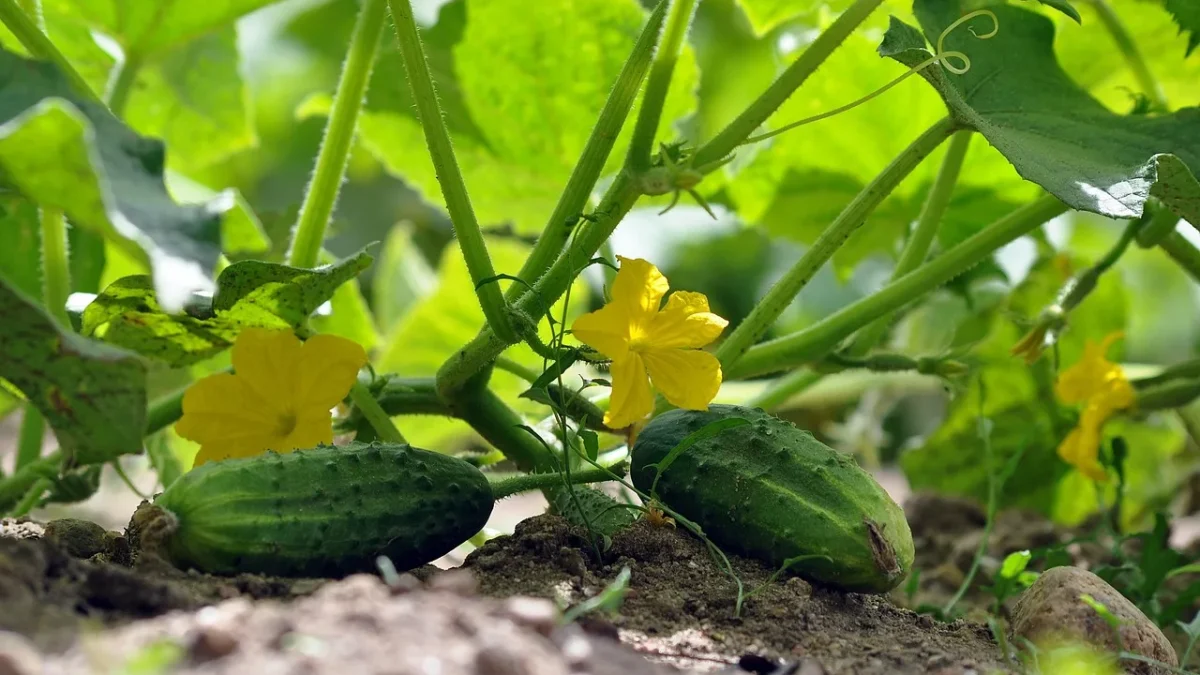
Here is the part specific to vine crops. When you plant a cucumber seedling, the roots start in one small spot. But within a month, that plant sends feeder roots out 12-18 inches in every direction, following the vine as it sprawls.
So I do not put a single emitter at the crown of the plant and call it done. I place two emitters per plant, about 8-10 inches out on each side of the stem, so the root zone gets wetted across a wider band.
For squash hills, where you might have two or three plants clustered, I circle three or four emitters around the mound about 6 inches from the stems. The water meets in the middle underground and creates one big moist zone.
Watch out
Do not aim water at the base of the stem where it meets the soil. Constant wetness at the crown invites stem rot and fungal collar disease, which can kill a squash plant in days. Keep emitters a few inches out.
How long and how often to run it
This is where people want a magic number, and I get it. The honest answer is that run time depends on your soil, but I can give you a solid starting point.
With 2 gph emitters, I start most cucumber and squash beds at 45-60 minutes per session. Sandy soil drains fast, so it needs shorter, more frequent runs. Clay holds water, so it needs longer runs spaced further apart.
- Establishment (first 2 weeks): water every day for 20-30 minutes so young roots never dry out.
- Vining stage: shift to every other day, 45-60 minutes, to push roots deep.
- Fruiting stage: in peak heat, go back to daily but keep the deep 45-60 minute runs. Fruit set is when water demand spikes hardest.
A cucumber that gets uneven water will give you bitter, misshapen fruit. Steady deep moisture is what gives you those straight, sweet cukes. If you want the full picture across crops, my drip watering schedule by plant type breaks down timing side by side.
Good to know
Water early in the morning, ideally before 8 a.m. The soil takes up moisture before the heat of the day, and any splash on lower leaves dries quickly, which cuts your disease risk way down.
Mulch, mildew, and the mistakes I see most
A mistake I see constantly is gardeners running drip tubing right on top of bare soil with no mulch. In our climate, bare soil bakes and half your water evaporates before it soaks in.
Lay 2-3 inches of straw or shredded bark over the tubing. Mulch cuts evaporation dramatically, keeps the root zone cool, and means you can water less often. On my own squash beds, mulching let me drop from daily watering to every other day in midsummer.
The other big one is overhead spray creeping onto the leaves. Cucumbers and squash are famous for powdery mildew, a white dusty fungus that loves wet foliage. Drip solves this beautifully because it keeps every drop at the soil line, but only if your emitters are not spraying sideways.
- Two emitters per cucumber, four around each squash hill.
- Emitters placed 6-10 inches out from the stem, never at the crown.
- 1/2 inch mainline, 2 gph pressure-compensating emitters.
- 2-3 inches of mulch over the tubing.
- Deep runs of 45-60 minutes, morning schedule.
Where to go from here
Vine crops taught me more about deep watering than anything else in the garden, because they punish shortcuts so quickly. Get the emitter placement wide, run your cycles deep, and mulch heavily, and you will be hauling in cucumbers by the basket.
If you grow a mixed bed, the same deep-watering logic carries over to other summer crops. Take a look at how I handle watering tomatoes with drip irrigation and my notes on drip timing and amounts for peppers, since they share a bed and a schedule with squash more often than not. For the cooler corner of the garden, my guide on drip watering for leafy greens uses a lighter touch worth knowing.
For product specs and emitter flow charts, I trust the guidance from Rain Bird, and the EPA WaterSense program has solid pointers on watering efficiently in hot climates.
Frequently asked questions
How many emitters does one cucumber plant need?
I use two emitters per cucumber plant, placed about 8-10 inches out on each side of the stem. This wets a wider band of soil so the sprawling feeder roots all get moisture. A single emitter at the crown leaves half the root zone dry and encourages shallow rooting.
How long should I run drip irrigation for squash?
Start at 45-60 minutes per session with 2 gph emitters, then adjust to your soil. Sandy soil needs shorter, more frequent runs, while clay holds water and can go longer between sessions. Check with a screwdriver: it should slide in easily to 6 inches an hour after watering.
Can I water cucumbers and squash every day?
During establishment and peak fruiting in high heat, daily watering is fine as long as each run is deep. In the vining stage, every other day usually works better because it pushes roots down. The key is depth, not frequency, so avoid short shallow daily sips.
Why are my cucumbers bitter and misshapen?
Uneven or inconsistent watering is the most common cause. When a plant swings between dry and wet, the fruit develops bitterness and odd shapes. Steady deep moisture from a well-placed drip system usually fixes it within a couple of weeks.
Does drip irrigation help prevent powdery mildew?
Yes, and it is one of the best reasons to switch. Powdery mildew thrives on wet leaves, and drip keeps every drop at the soil line instead of on the foliage. Just make sure your emitters are not spraying sideways onto the lower leaves.
What psi should my drip system run at for vine crops?
Aim for 15-25 psi at the emitters. Most drip emitters are designed for that range, and pressure-compensating emitters hold steady flow across it. Going much higher can pop fittings apart and blow tubing off connectors, so add a pressure regulator if your source runs hot.