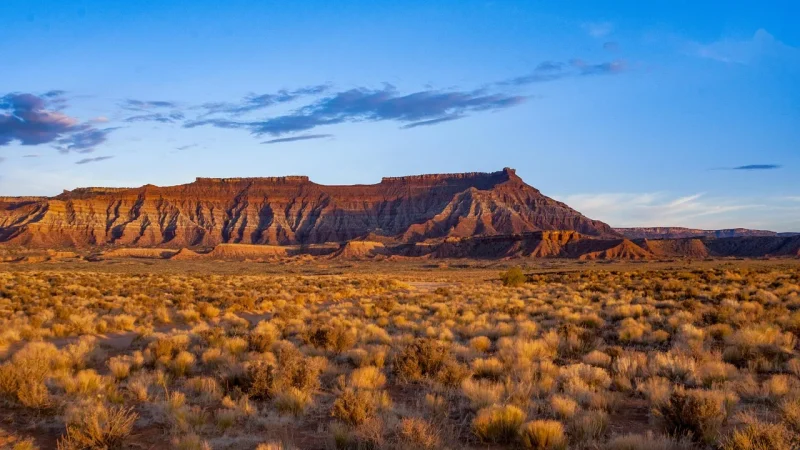
Last spring a client in Oro Valley called me because her desert willow looked stressed in July, and she was watering it every single day. The tree was not thirsty. It was drowning slowly, and its roots had never bothered to grow deep because water always showed up at the surface.
That is the puzzle with drip watering native plants in a place like Tucson. The goal is not to keep them constantly moist. The goal is to teach them to fend for themselves, and a tapering deep-drip schedule is how you do it.
Once a native like a palo verde, brittlebush, or agave is established, usually after its first full year, it wants deep and infrequent soaks. Frequent shallow watering keeps roots lazy and shallow, which is the opposite of what you paid for when you chose a low-water yard.
Key takeaways
- Established natives thrive on deep, infrequent soaks, not daily sips.
- Wean plants gradually over a full season by stretching days between waterings, not by cutting run time.
- Aim to wet soil 2-3 feet deep, then let it dry out before the next cycle.
- Move emitters outward as the plant grows so water reaches the active root zone.
Why deep and infrequent beats little and often
Roots chase water. If you deliver a small amount at the surface every morning, roots stay in that top few inches where it is hottest and driest between cycles.
When you soak deeply and then wait, the surface dries out and the roots follow the moisture downward. Deeper roots mean the plant can ride out heat waves and skipped waterings without complaint.
A quick note on a term you will see a lot: an emitter is the small plastic fitting that drips water onto the soil at a set rate, measured in gallons per hour (GPH). Common sizes are 0.5, 1, and 2 GPH.
Quick tip
To check depth, push a long screwdriver into the soil an hour after a cycle finishes. It slides easily through wet soil and stops at dry soil. If it only goes down 6 inches, you need a longer run time, not more frequent days.
The tapering schedule, month by month
Weaning works best when you change the days between waterings, not the length of each soak. Keep the soak long and deep every time. Just stretch the gap.
Here is the rough progression I use for an established native shrub or tree in low desert. Adjust for your soil and your summer.
| Season | Days between deep soaks | Rough goal |
|---|---|---|
| Spring (mild) | Every 10-14 days | Support new growth |
| Early summer heat | Every 7-10 days | Prevent heat stress |
| Peak summer (over 105 F) | Every 7 days | Hold steady, do not push growth |
| Fall cooldown | Every 14-21 days | Begin stretching gaps |
| Winter dormancy | Every 21-30 days or rain | Minimal water |
Each year, nudge those gaps a little wider. A palo verde that needed a soak every 7 days in its second summer might handle every 14 days by year four, and eventually survive on rainfall alone in a wet year.
Watch out
Do not wean during the worst heat of the summer. Stretching a native’s water in peak July or August can cook it. Make your biggest schedule changes in spring and fall when temperatures are forgiving.
Sizing emitters and run time for a deep soak
The whole schedule falls apart if each cycle does not actually reach deep. This is where beginners get tripped up.
A single 1 GPH emitter running for one hour puts out one gallon. For a young shrub that might wet soil about a foot down in sandy soil, less in clay. To reach 2-3 feet you often need more emitters or a much longer run.
My usual setup for a mid-size native shrub is two to four 1 GPH emitters on 1/4 inch tubing, branched off the main 1/2 inch supply line, running two to four hours. For a tree, I use more emitters spread around the drip line and run cycles of four hours or more.
Good to know
Most home drip systems run best around 20-30 psi (pounds per square inch, a measure of water pressure). Too much pressure blows emitters off the tubing. A simple pressure regulator costs about 8 to 15 dollars and saves you a lot of leaks.
A mistake I see constantly is people adding more emitters instead of extending run time. More emitters spread water wider, but if the run is short, everything stays shallow. Depth comes from time, not just volume.

Move the water as the plant grows
Roots do most of their drinking near the drip line, which is the circle on the ground directly under the outer edge of the branches. On a young plant that circle is small. On a mature mesquite it can be ten feet across.
If your emitters are still hugging the trunk two years later, you are watering wood, not roots. Every year or so, slide emitters outward toward that drip line.
- Find the outer edge of the canopy and picture the circle under it.
- Reposition emitters to sit under that edge, not at the trunk.
- Add a stake or two so 1/4 inch tubing does not creep back inward.
- Recheck depth with the screwdriver after the next cycle.
If you want a deeper breakdown of run times and emitter counts for different plant categories, our guide on setting a drip watering schedule by plant type lays out numbers side by side.
A realistic first-year to fourth-year story
Say you plant a one-gallon desert willow in October. That first year it is not a native yet in behavior. It has a tiny root ball and needs regular water to establish, closer to every 3-4 days in its first summer.
By the second year you start the tapering schedule above. Third year, you stretch the gaps wider and move emitters out to the growing drip line. By year four, that tree might only ask for water during the hottest, driest stretches.
The plant tells you if you push too fast. Wilting at dawn, dropping leaves, or dull gray-green color means back off and shorten the gap again.
Quick tip
Water in the early morning, before sunrise if you can. Less evaporates, and the plant heads into the heat of the day already hydrated. Evening watering can leave crowns damp overnight and invite rot.
A quick weaning checklist
Before you widen any gap in the schedule, run through this.
- The plant has been in the ground at least one full year.
- Your last few cycles reached 2-3 feet deep (screwdriver test passed).
- Emitters sit under the current drip line, not the trunk.
- You are making the change in spring or fall, not peak heat.
- You checked the plant a week later for stress signs.
Natives are the easy ones to wean. Thirstier plants play by different rules, which is why watering something like strawberries on drip emitters or keeping herbs on a working drip schedule leans toward more frequent, gentler cycles, and roses on drip need their own steady rhythm covered in our guide to watering roses with drip irrigation.
Where to go from here
Start by testing how deep your current cycles actually reach, because that one screwdriver check tells you more than any schedule chart. Then pick spring or fall and stretch a single gap wider, watch the plant for a week, and repeat.
If you want to sanity-check your plant choices and water budgets, the EPA WaterSense plant guidance and your regional University of Arizona Cooperative Extension are both solid, free references. Patience is the real tool here. Give a native a couple of seasons of deep, spaced-out drip watering and it will do most of the work for you.
Frequently asked questions
How often should I water established native plants on drip?
Once established after their first year, most desert natives want a deep soak every 7-14 days in summer and much less in cooler months. The exact gap depends on your soil, the plant, and the heat. The goal is to let the top of the soil dry out fully between cycles so roots grow deeper.
How do I know if my drip cycle is watering deep enough?
An hour after a cycle finishes, push a long screwdriver or metal rod into the soil near the emitters. It moves easily through moist soil and stops when it hits dry soil. If it only reaches 6 inches, extend your run time until you reach 2-3 feet down.
Can I wean a native off water during the summer?
It is safer not to. Making big schedule changes during peak heat over 105 F can stress or kill a plant fast. Stretch your watering gaps in spring and fall instead, when temperatures give the plant room to adjust without cooking.
How many emitters does one native shrub or tree need?
A mid-size shrub usually does well with two to four 1 GPH emitters, while a tree needs more spread around its drip line. Depth comes from run time more than emitter count, so a longer cycle often beats simply adding more emitters at the trunk.
Why do my native plants look worse the more I water them?
Frequent shallow watering keeps roots near the surface and can suffocate roots or invite rot, which looks a lot like drought stress. Natives evolved for boom-and-bust moisture. Switching to deep, infrequent soaks usually turns a struggling native around within a few weeks.
Should I move my drip emitters as the plant grows?
Yes. Roots feed most near the drip line, the ground under the outer edge of the branches, and that circle widens every year. If emitters stay at the trunk, you water wood instead of active roots, so slide them outward roughly once a year.