Last spring a neighbor knocked on my door holding a hose timer still in its blister pack, half embarrassed. She had bought it three weeks earlier and could not bring herself to install it because she had no idea how long to run it or what the little dial numbers meant. Twenty minutes at her spigot and she was set for the season.
That conversation happens all the time. The same handful of drip timer questions come up again and again, and none of them are complicated once someone just tells you the answer plainly.
So here they are, rapid-fire. These are the first-timer drip timer questions I field most often, with the short version up front and the reasoning right behind it.
Key takeaways
- Run length depends on emitter flow, not a magic number: most beds want 30-60 minutes a few times a week.
- Water in the early morning, roughly 4 to 8 a.m., to cut evaporation and disease.
- Leaving a battery timer on the tap is fine in warm months, but pull it before the first freeze.
How long should I run my drip timer?
This is the number one question, and the honest answer is that time alone tells you nothing. What matters is how much water your emitters put out.
Drip emitters are rated in gallons per hour (GPH). A common size is 1 GPH, which means a single emitter drips one gallon over a full hour. If you run that emitter for 30 minutes, the plant gets half a gallon.
So the real question is how much water your plants need, then working backward to the minutes. A young shrub might want 1 to 2 gallons per watering. With a single 1 GPH emitter, that is 60 to 120 minutes. With two 1 GPH emitters, cut that in half.
Quick tip
Do the “screwdriver test.” An hour after a cycle, push a long screwdriver into the soil near a plant. If it slides down 6 to 8 inches easily, your run time is about right. If it stops short, add minutes.
For most home beds with 1 to 2 GPH emitters, I start people at 30 to 45 minutes, three days a week, then adjust. Vegetables in raised beds often want a shorter daily run instead, maybe 20 minutes every morning in summer heat.
Does tubing size change the run time?
Not directly, but it changes how much water reaches the far end. Half inch mainline (the thicker supply tubing) carries plenty of volume. The 1/4 inch tubing (the skinny stuff that branches off to individual plants) is meant for short runs, usually under 15 to 20 feet, or the last emitters starve.
What time of day should the timer water?
Early morning. If you set one thing and never touch it again, make it a start time between 4 and 8 a.m.
Watering before sunrise means the water soaks in before the day heats up, so you lose far less to evaporation. The EPA WaterSense program points out that watering in the cooler morning hours can save a real chunk of what would otherwise evaporate midday.
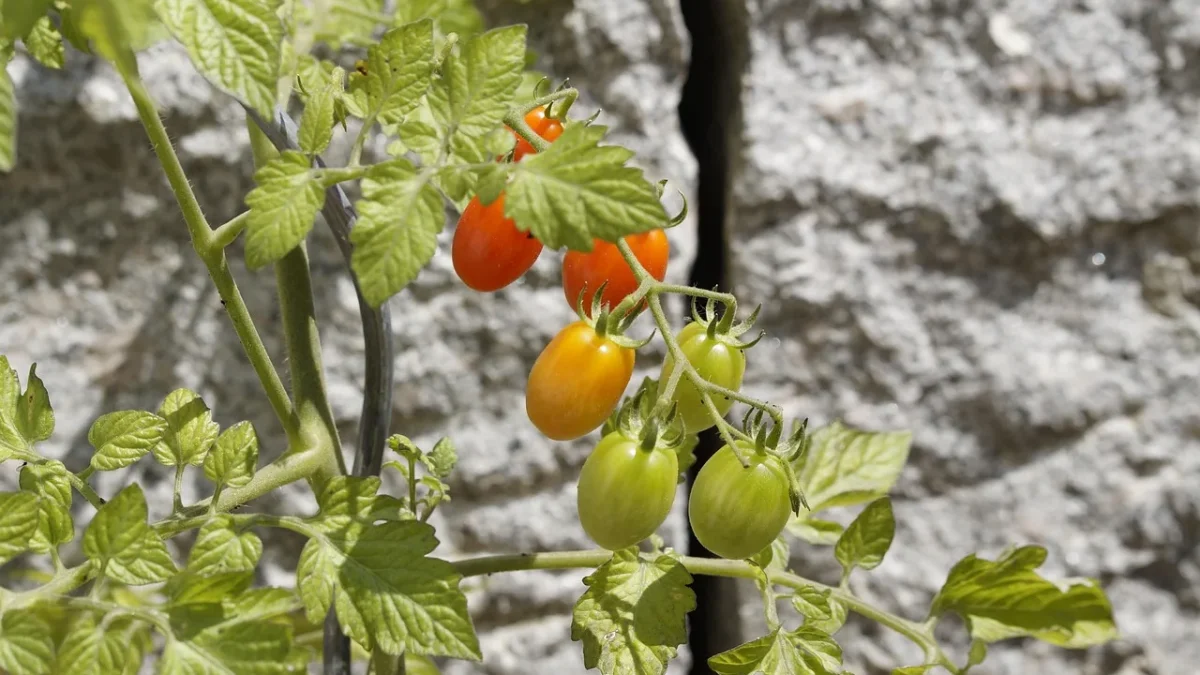
Morning also keeps foliage from staying wet all night. Evening watering leaves leaves and mulch damp for hours, which invites fungus and rot, especially on tomatoes and roses.
Watch out
Do not schedule the start time for when you are usually home to “keep an eye on it.” The point of a timer is to run while you sleep or travel. Pick 5 a.m. and trust it.
Here is a scenario I see constantly. Someone sets their timer for 6 p.m. because that is when they get home from work, then wonders why their squash keeps getting powdery mildew. We move the start to 5 a.m., and the problem eases within a couple of weeks.
Can I leave the timer on the tap all the time?
In the growing season, yes. A battery-powered hose timer is built to live outdoors on your spigot for months. That is the whole point of automating it.
Two cautions, though. First, most timers take AA or 9-volt batteries, and a dying battery is the top reason a timer “randomly stops working.” Change them at the start of each season and you avoid the mystery entirely.
Second, freezing weather is the killer. Water left inside a timer expands when it freezes and cracks the plastic housing. That is why the answer flips in late fall.
Good to know
A basic single-outlet battery timer runs about 25 to 40 dollars. A smart Wi-Fi model runs 60 to 120 dollars. The cheap one waters your garden just as well; you are paying extra for phone control and weather skips.
When the first frost is coming, take the timer off, drain it, pop the batteries out, and store it somewhere that stays above freezing. I walk through the full routine in my guide on how to winterize a hose timer, because a little care in October saves you buying a new unit in April.
A quick comparison: fixed schedule vs. smart timers
Beginners often ask whether they need a fancy timer. Usually not to start. Here is the plain trade-off.
| Feature | Basic battery timer | Smart Wi-Fi timer |
|---|---|---|
| Cost | 25-40 dollars | 60-120 dollars |
| Set schedule | Dials or buttons on the unit | Phone app |
| Skips rain automatically | No (add a sensor) | Often yes, via weather data |
| Good for beginners | Yes, very | Yes, if you like apps |
If you do want the system to hold off when a storm rolls through, you can add that to almost any setup. My walkthrough on rain sensors and rain delay features covers both the plug-in sensors and the built-in delay buttons.
A few more fast answers
These come up almost as often as the big three.
- What psi does a drip system want? Most drip emitters are happy at 10-15 psi. Household water often arrives at 40-60 psi, so a small pressure regulator (about 8 to 12 dollars) protects your tubing from blowing apart.
- Do I need a filter? Yes, a simple screen filter. Grit clogs emitters, and clogged emitters are the number one repair call I get.
- Can one timer water two separate beds on different schedules? A single-outlet timer runs everything on the same schedule. For true independent zones, look at my notes on setting up a multi-zone drip timer.
A mistake I see constantly: people run their drip system for five minutes, panic that “nothing is getting wet,” and crank it up to two hours. Drip is slow and deep on purpose. The water spreads sideways underground, so the surface can look dry while the root zone is soaked.
Quick tip
Watering deeply and less often beats a quick daily sprinkle. It trains roots to grow down, which makes plants far more drought-tough by midsummer.
Where to go from here
If you have answered these questions in your head, you already know enough to set a timer and stop babysitting your garden. Start with an early-morning schedule, a 30-minute run, and the screwdriver test after a week.
Once the basics feel comfortable, the full step-by-step in my guide to automating drip watering with a timer will help you dial in the schedule and add the small parts, like the regulator and filter, that keep everything running clean for years.
Frequently asked questions
How many days a week should a drip timer run?
For most established beds, three days a week works well in mild weather, moving to every day or every other day during peak summer heat. Vegetables and containers dry out faster and often want a short daily run. Watch your plants and the soil moisture rather than locking into one number.
Is it bad to leave a hose timer outside in winter?
Yes, if it can freeze. Trapped water expands and cracks the timer housing, ruining it. Before the first hard frost, remove the timer, drain it fully, take out the batteries, and store it above freezing until spring.
Why is my drip timer not turning on?
The most common cause by far is a dead or weak battery, so swap those first. Also check that the manual dial is set to auto and not off, and that the tap behind the timer is actually open. A clogged filter can also make it seem like nothing is flowing.
Should I water in the morning or evening with a drip timer?
Morning, ideally between 4 and 8 a.m. You lose less water to evaporation before the day heats up, and foliage does not sit wet overnight, which cuts down on fungus and mildew. Evening watering is a common cause of disease on plants like tomatoes and roses.
Do I need a pressure regulator for a drip timer?
In almost every home setup, yes. Household water pressure often runs 40-60 psi, while drip emitters want about 10-15 psi. A small inline regulator costs around 8 to 12 dollars and stops your fittings from popping apart under pressure.
How long should a new plant be watered on drip?
Newly planted shrubs and perennials usually want 1 to 2 gallons per watering while they establish. With a single 1 GPH emitter that means roughly 60 to 120 minutes, or half that with two emitters. Water more frequently in the first few weeks, then taper off as roots settle in.