Last July, a client called me in a mild panic. Her tomatoes were wilting even though her new solar drip timer was supposed to run every morning at 6 a.m. We had just come off five gray, humid monsoon days, and she was sure the timer had “died in the clouds.”
It had not died. But her worry was fair, and it is the exact question I wanted to answer for good: does a solar drip timer actually keep its schedule when the sun goes missing for a week? So I set one up in my own yard and watched it for a full season.
Here is the honest report, panels, batteries, cloudy days and all.
Key takeaways
- A good solar drip timer stores charge in an internal battery, so a few cloudy days rarely stop it from running.
- The real failure point is usually a weak or aging battery, not the solar panel itself.
- Keep the panel clean and angled toward the sun, and check the battery once a season.
- Solar timers work best for small zones running 2-3 short cycles a day at low pressure.
How a solar drip timer actually works
A solar drip timer is a battery timer with a small solar panel bolted on top. The panel does not run the valve directly. Instead, it trickles a charge into an internal rechargeable battery, and that battery powers the little motor that opens and closes the water valve.
That distinction matters a lot. The sun is not “on demand” for your watering. It is just topping off a tank you draw from.
So when the sky goes gray, the timer keeps drawing from stored charge. On the models I trust, a fully charged battery holds enough to run a normal schedule for several days with no sun at all.
Good to know
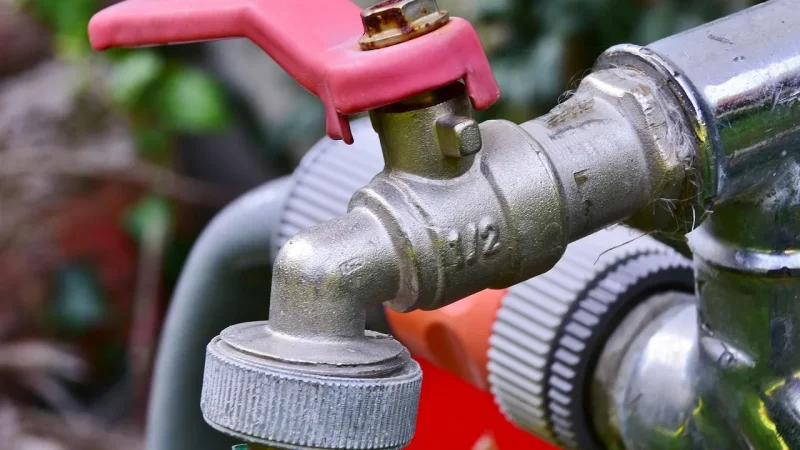
Most solar drip timers use a 1/2 inch or 3/4 inch hose thread inlet and are built for low pressure, usually around 10-15 psi (pounds per square inch, a measure of water pressure). They are not meant to run high-flow sprinklers.
My season-long test setup
I put the timer on a single raised bed: four pepper plants, two basil, and a row of marigolds. I ran 1/2 inch mainline tubing down the bed and 1/4 inch feeder lines to each plant, with 1 gallon per hour (gph) emitters at the peppers and 0.5 gph at the herbs.
The schedule was simple: two cycles a day, 6 a.m. and 6 p.m., ten minutes each. That is a light, frequent pattern, which is what drip does best.
Then I waited for the monsoon to do its worst. If you want the full walk-through on programming a schedule like this, I lean on the steps in my guide to automating drip watering with a timer, which covers cycle length and start times in plain terms.
What happened during the cloudy stretches
We had two long gray runs last summer. The first was four days of heavy overcast. The second was a rougher stretch: six days, with rain on three of them and the panel barely seeing direct light.
Through the four-day run, the timer never missed a cycle. Not one. I checked the emitters each morning with my finger in the soil, and the ground was damp on schedule every time.
The six-day stretch is where it got interesting. By day five, the timer’s little display was flickering, a classic low-battery warning. It still fired both cycles, but I could tell the battery was near the bottom of its reserve.
Then the sun came back on day seven, and by that afternoon the charge indicator was full again. No missed waterings the entire time.
Quick tip
If your display starts flickering during a gray spell, do not panic and start pressing buttons. That usually just burns more battery. Let the next sunny afternoon recharge it, and check the schedule held afterward.
The battery is the real weak link
Here is the part nobody puts on the box. The solar panel almost never fails first. The rechargeable battery inside does.
Those batteries are usually small NiMH (nickel metal hydride) or lithium cells, and they wear out after two to three seasons of daily charge cycles. A tired battery cannot hold a reserve, so one cloudy day starts causing missed cycles that a fresh battery would have shrugged off.
A mistake I see constantly: someone blames the panel, buys a whole new timer, and the old one just needed a five dollar battery swap. Before you replace anything, read up on battery care for drip timers that last, because a little maintenance stretches these units for years.
Watch out
Do not leave a solar timer sitting in a shed over winter with a dead battery. A fully drained rechargeable cell can be ruined by deep discharge. Charge it up before storage, or pull the battery out entirely.
Solar versus a plain battery timer
People ask me constantly whether solar is worth it over a standard AA-battery timer. It depends on your setup. Here is the quick comparison I give clients.
| Factor | Solar drip timer | Standard battery timer |
|---|---|---|
| Battery replacement | Every 2-3 seasons (internal cell) | Every season (AA batteries) |
| Cloudy-week risk | Low if battery is healthy | None (does not rely on sun) |
| Best placement | Full or partial sun on the panel | Anywhere, even full shade |
| Rough cost | $35 to $70 | $20 to $45 |
| Upkeep | Wipe the panel, check battery yearly | Swap batteries on a schedule |
If your timer lives in a shady corner behind the house, skip solar. The panel will never get enough light, and you will fight low-battery warnings all season.
Getting the most out of a solar timer
A few habits made the difference between “flawless season” and “why did my basil dry out.” Run through these when you install one.
- Angle the panel toward the midday sun, not flat, so it catches more light.
- Wipe dust off the panel every couple of weeks. In Tucson, dust alone can cut charging noticeably.
- Start each season with a fresh internal battery if the unit is more than two years old.
- Keep runs short and frequent, which sips power instead of gulping it.
- Test the whole schedule manually the day you install it, before you trust it.
That last one saves the most heartache. If your timer clicks on but nothing comes out of the emitters, the problem is almost never the solar part, and my walk-through on fixing a timer that runs but delivers no water covers the usual culprits like a clogged filter or a valve that did not fully open.
When the seasons change
One thing a solar timer will not do for you is know that fall arrived. It runs whatever you programmed, sunny or not.
So when the heat breaks and your peppers stop drinking as hard, you still have to dial the schedule back yourself. I reset mine down to one cycle a day in October, and there is a rhythm to it that I lay out in my notes on adjusting your watering schedule by season.
The solar part is steady. Your plants’ needs are not.
So, does it hold up?
After a full monsoon season, my answer is a clear yes, with one condition. A solar drip timer with a healthy battery held its schedule through every cloudy stretch I threw at it, including six gray days in a row.
The catch is that battery. Keep it fresh, keep the panel clean, and a solar timer is a genuinely low-fuss way to water a small bed. Let the battery age out, and you will start blaming the clouds for something that costs five dollars to fix.
Where to go from here
If you are shopping, look for a unit with a replaceable internal battery, not a sealed one, and check the manufacturer’s stated psi range against your own water pressure. The EPA’s WaterSense program and your local university extension service (mine is the University of Arizona Cooperative Extension) both publish solid, region-specific watering guidance worth a read before you set a schedule.
Set it up on a sunny day, test every emitter with your own eyes, and give the battery a look each spring. Do that, and a few cloudy days will be the least of your worries.
Frequently asked questions
How many cloudy days can a solar drip timer survive without missing a cycle?
With a healthy, fully charged battery, most quality solar drip timers keep running for several days of no direct sun, often four to six. In my own season-long test, the unit held its schedule through six straight gray days. The limit depends almost entirely on battery condition, not the panel.
Why does my solar timer show a low-battery warning even in summer?
The most common cause is an aging internal battery that no longer holds a full charge, usually after two to three seasons. Dust or shade on the panel can also starve it of light. Try cleaning the panel and repositioning it toward the sun first, then replace the internal cell if the warning persists.
Can I install a solar drip timer in a shady spot?
It is not a good idea. The panel needs regular sunlight to keep the battery topped off, and a shady corner will leave you fighting constant low-battery warnings. If your only mounting spot is shaded, a standard battery timer is the more reliable choice.
Does a solar drip timer adjust watering when the weather changes?
No. A solar timer only powers itself from the sun, it does not sense weather or soil moisture. It runs exactly the schedule you program, so you still need to shorten cycles in cooler months and lengthen them in peak heat yourself.
What water pressure does a solar drip timer need?
Most are built for low pressure, commonly around 10-15 psi, and use standard hose thread inlets. Running one at high household pressure can damage the valve or blow emitters off your 1/4 inch tubing. If your line pressure is high, add a pressure regulator ahead of the timer.
How often should I replace the battery in a solar drip timer?
Plan on a fresh internal battery every two to three seasons of daily use. If you notice missed cycles or flickering displays during otherwise sunny weather, that is your sign the cell is worn out. A replacement usually costs around five dollars and saves you from buying a whole new timer.