
Last spring a client in Tucson called me over because half her flower bed looked scorched while the other half was drowning. She had bought a mixed bag of emitters at the hardware store and screwed them in at random. Some were micro sprays, some were micro sprinklers, and she had no idea there was a difference.
There is a real difference, and it matters. The micro spray vs micro sprinkler question comes down to how the water leaves the head and how far it travels. Get it right and a whole bed stays evenly moist on one short run. Get it wrong and you fight dry spots and fungus all season.
Both of these are small plastic heads that push out a fine spray of water above the soil, unlike drip emitters that drip straight down. They thread onto 1/4 inch tubing and run at low pressure, usually 15-30 psi (psi means pounds per square inch, a measure of water pressure). That is where the similarity ends.
Key takeaways
- A micro spray has no moving parts and throws a fixed fan of water over a short radius, usually 2-4 feet.
- A micro sprinkler has a small spinning rotor that flings water farther, often 4-8 feet, in a slower, gentler pattern.
- Sprays suit dense ground cover and small beds; sprinklers suit wider beds and shrubs where you need reach.
- Flow rates run roughly 5-20 gallons per hour for sprays and 10-30 for sprinklers, so plan your zone size around them.
What a micro spray actually does
A micro spray is the simpler of the two. Water hits a fixed plastic cap and fans out in a set pattern: full circle, half circle, quarter, or a narrow strip. Nothing moves.
Because it sprays fine droplets over a short distance, it lays water down fast and close. A typical micro spray covers a radius of 2-4 feet and flows somewhere between 5 and 20 gallons per hour depending on the pattern and pressure.
That fast, close delivery is perfect for tight planting. Think of a bed of vinca, lantana, or low herbs where the roots are shallow and packed together. You want gentle, even coverage without reaching into the neighbor’s gravel.
Quick tip
Micro sprays come in color-coded caps for each pattern. Keep a labeled sandwich bag of spares in your toolbox so you can swap a half-circle for a full-circle in seconds when you rearrange plants.
What a micro sprinkler does differently
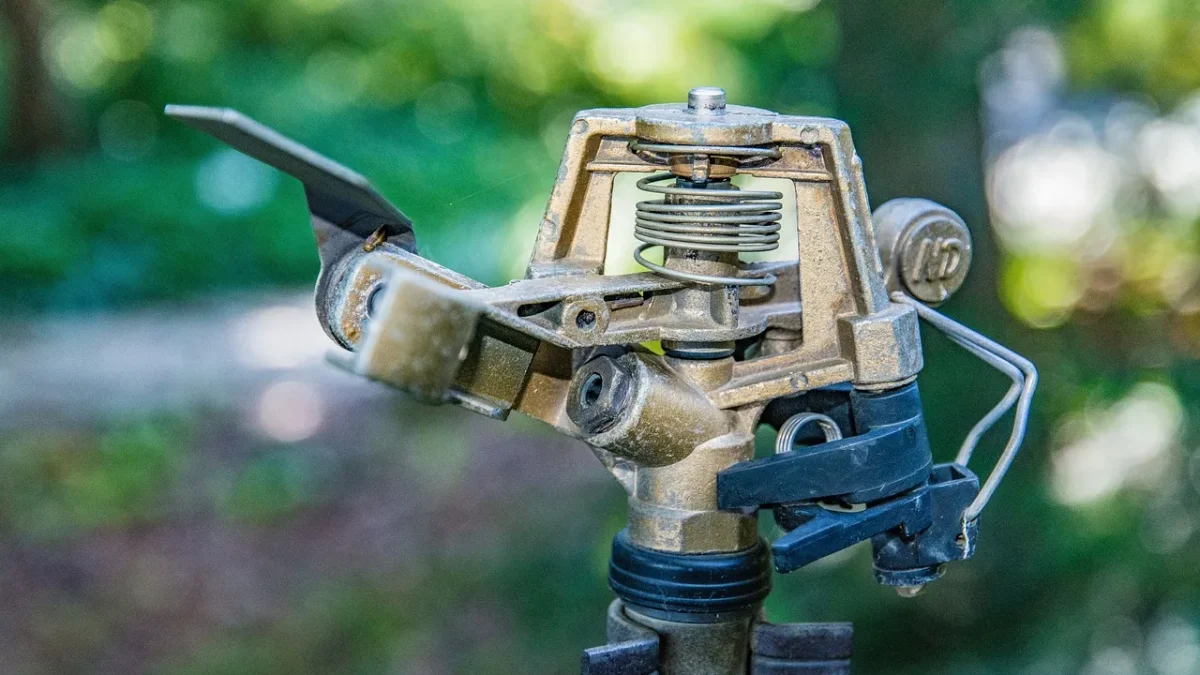
A micro sprinkler looks similar but has a tiny rotor, a spinning bridge or paddle that breaks the stream and throws it outward. That spinning motion does two things: it reaches farther and it lands softer.
Reach is the big one. Where a spray taps out around 4 feet, a micro sprinkler commonly covers a 4-8 foot radius. On a single head that can be the difference between one emitter and three.
The droplets also fall in a slower, rain-like pattern rather than a hard fan. That gentler landing matters on bare soil and slopes, where a hard spray can dig channels and wash mulch downhill.
Flow is higher to feed that bigger circle, usually 10-30 gallons per hour. So a sprinkler covers more ground per head but drinks more water per head. You are trading emitter count for flow per emitter.
Micro spray vs micro sprinkler at a glance
| Feature | Micro spray | Micro sprinkler |
|---|---|---|
| Moving parts | None (fixed cap) | Small spinning rotor |
| Radius | 2-4 feet | 4-8 feet |
| Flow rate | 5-20 GPH | 10-30 GPH |
| Droplet feel | Fine, fast fan | Slower, rain-like |
| Best for | Dense ground cover, small beds | Wider beds, shrubs, slopes |
| Rough cost each | $0.75 to $2 | $1.50 to $4 |
Neither is better in a vacuum. They are two tools for two coverage shapes. The trick is matching the tool to the bed.
How to choose for your bed
Start by looking at what you are watering and how wide it spreads. Then match the head to that shape.
- Dense, low, shallow-rooted plants in a small footprint: reach for micro sprays.
- Wider beds, spaced shrubs, or new plantings on a slope: reach for micro sprinklers.
- An odd strip along a fence or path: use a strip-pattern micro spray so you do not water the pavement.
- A single small tree or large shrub: one micro sprinkler on a stake usually beats a cluster of sprays.
A mistake I see constantly is people buying all sprays because they are cheaper, then packing in twice as many to cover a big bed. That crowds your tubing, raises your total flow, and often overloads the zone. Two micro sprinklers can quietly replace six sprays and use less tubing.
Watch out
Do not mix sprays and sprinklers on the same run if you can help it. Their flow rates differ, so the high-flow heads steal pressure from the low-flow ones and your coverage goes lopsided. Group like with like on separate lines.
Flow, pressure, and not overloading a zone
Every head you add pulls from the same water budget. A standard 1/2 inch drip line off a home faucet comfortably feeds around 200-240 gallons per hour total before pressure sags.
So do the math. Ten micro sprinklers at 20 GPH each is 200 GPH, and you are already at the ceiling. If your numbers do not add up, this is why understanding how different emitter types and their flow rates work saves you from a weak, uneven system.
Pressure matters too. Both heads want steady low pressure, roughly 20-30 psi. If your line runs high, a pressure regulator smooths it out so sprays do not mist into fog and sprinklers spin evenly.
Good to know
Both micro sprays and sprinklers have small openings that clog fast on hard or well water. A basic screen filter is cheap insurance, and choosing the right filter and mesh size for your water keeps those tiny orifices clear for years.
Getting the parts to fit together
These heads almost always sit on 1/4 inch tubing, which branches off your main 1/2 inch line. If you are unsure which tubing carries water where, the difference between 1/4 inch and 1/2 inch drip tubing is worth five minutes of reading before you cut anything.
You connect them with barbed fittings, little plastic pieces that punch into the line. Getting the right fittings and connectors means fewer leaks and pop-offs when the water turns on.
For water quality, I already mentioned filtering, but it is worth planning for up front. A quick look at picking a filter and mesh size for drip pays off the first summer.
Here is a real scenario. Say you have a 12 foot by 4 foot bed of salvia and lantana against a block wall. I would run one 1/2 inch line down the length, tap in three micro sprinklers spaced about 6 feet apart on 1/4 inch risers, and let their 5-6 foot throw overlap slightly in the middle. Three heads, even coverage, done in an afternoon.
If that same bed were packed with low, matting thyme instead, I would swap to five or six micro sprays on shorter spacing so the fine fan lands evenly on the shallow roots without over-throwing.
Where to go from here
Walk your bed with a tape measure before you buy anything. Note how wide each planting spreads and whether the soil is flat or sloped, then match sprays to the tight spots and sprinklers to the open ones.
Run the system for a few minutes and watch where the water actually lands. Adjust head placement or swap a pattern until the whole bed glistens evenly, and you will water less and grow more all season.
Frequently asked questions
Can I use micro sprays and micro sprinklers in the same garden?
Yes, absolutely. Just keep them on separate 1/4 inch runs rather than mixing them on one line. Their flow rates differ enough that combining them on a single run lets the higher-flow heads pull pressure away from the lower-flow ones, which creates dry spots.
How much area does one micro sprinkler cover compared to a micro spray?
A micro spray usually covers a 2-4 foot radius, while a micro sprinkler reaches 4-8 feet thanks to its spinning rotor. That means one sprinkler can often replace two or three sprays in an open bed. In tight plantings, though, the shorter spray radius gives you more control.
Why do my micro heads keep clogging?
The openings on both sprays and sprinklers are tiny, so mineral bits and debris block them quickly, especially on hard or well water. Install a simple screen filter at the start of your line and flush the line once or twice a season. Choosing an appropriate mesh size for your water keeps clogs rare.
What pressure do micro sprays and micro sprinklers need?
Both run best at low pressure, roughly 20-30 psi. If your household pressure is higher, add a pressure regulator so sprays do not turn to fog and sprinklers spin evenly. Too little pressure and the sprinkler rotor may not turn at all.
How many micro sprinklers can I put on one line?
It depends on flow. A typical 1/2 inch line off a faucet handles around 200-240 gallons per hour, so at 20 GPH each you can run about 10 micro sprinklers before pressure drops. Add up the flow of every head on the line and stay under that total for even coverage.
Are micro sprinklers better for slopes than micro sprays?
Generally yes. The slower, rain-like droplets from a micro sprinkler soak in instead of running off, so they hold up better on inclines. A hard micro spray can dig small channels and wash mulch downhill, especially on bare or freshly planted soil.